
AI Everywhere: What DigComp 3.0 Means for VET and Learner Suitability
AI Transparency Statement: Gemini assisted in drafting this article for research, summarisation, and wording.
Let’s be honest. AI is no longer some future-focused concept sitting off to the side waiting for us to catch up. It is already built into the tools people use every day to write, search, plan, create, communicate and solve problems. That is exactly why DigComp 3.0 matters for our vocational education and training (VET) sector.
One of the biggest shifts in the updated framework is that AI has been added and embedded across digital competence quite broadly. For RTOs, that matters because there is a clear framework about what digital competence is. It is about whether learners can participate effectively, safely and critically in increasingly digital learning and work environments.

Why this matters under the 2025 Standards for RTOs
With the 2025 Standards for RTOs placing greater emphasis on understanding learner needs before enrolment, this conversation becomes even more important. Providers need to review a learner’s language, literacy, numeracy and digital literacy to determine whether the training product is suitable, and to identify any support needs early.
This is a really important shift. It is no longer enough to assume that because a learner uses a phone, scrolls social media or can complete an online enrolment form, they are digitally ready for training. Digital confidence does not always equal digital competence. They are not the same thing.
As more qualifications rely on online learning platforms, digital communication, research, content creation and AI-enabled systems, that gap becomes harder to ignore. If we are serious about learner success, then we need to be serious about understanding the digital demands of the training product before the learner is enrolled.
DigComp 3.0 gives providers a more useful lens
This is where DigComp 3.0 becomes genuinely useful. It gives providers a broader and more realistic way to think about digital literacy and learner readiness.
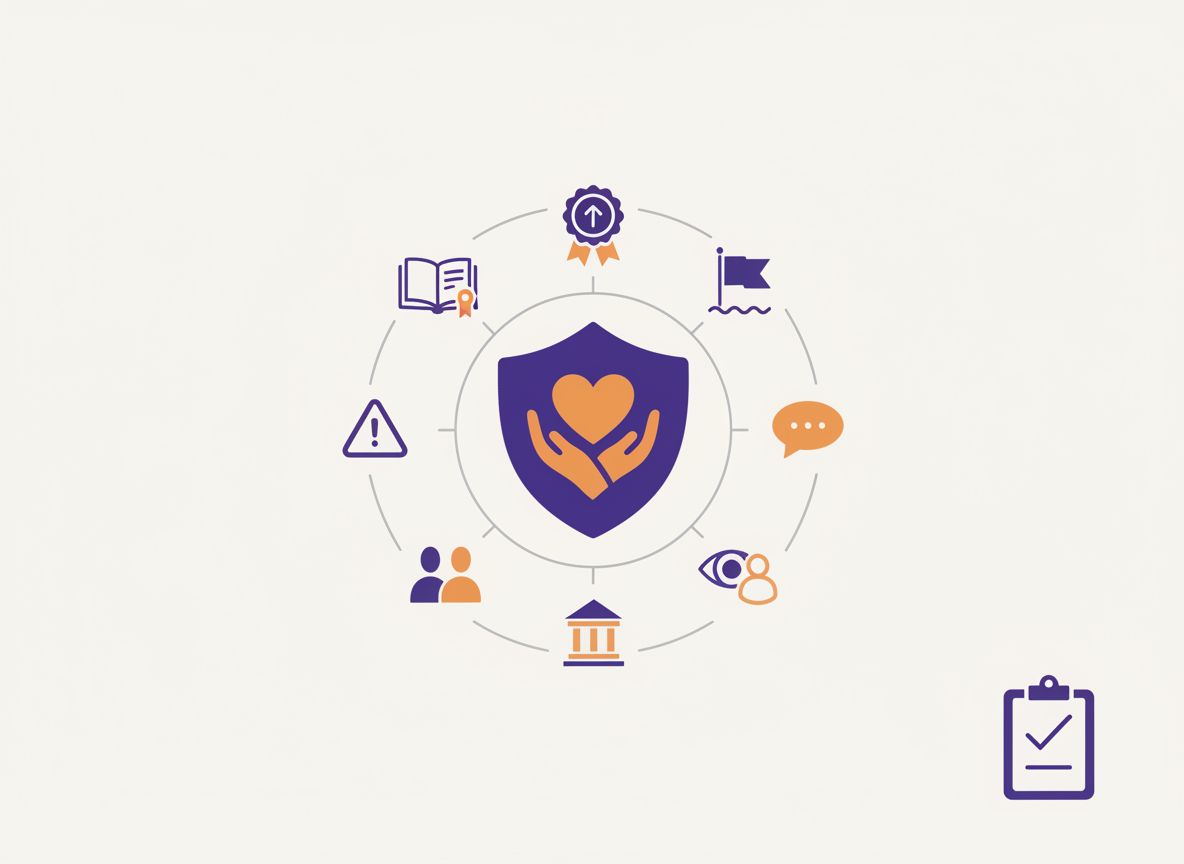
Rather than treating digital skills as a simple checklist, DigComp 3.0 frames competence across areas like finding and evaluating information, communicating and collaborating, creating digital content, staying safe and solving problems. With AI now threaded through those areas, it also reflects the reality learners are stepping into, both in training and in the workplace.
That makes it highly relevant when considering whether a learner is likely to succeed in their chosen training product. A learner may meet the language and numeracy demands on paper, but still struggle if they cannot navigate digital systems, evaluate online information, use digital tools appropriately, or understand the risks and limitations of AI-supported work. It is also important to note that DigComp 3.0 names pre-requisites to achieve the Basic level of DigComp:
“Several pre-requisites must be in place for an individual to be able to reach the DigComp 3.0 basic level of digital competence, starting with a basic level of literacy. Other pre-requisites include access to a sufficiently fast and stable internet connection; to one or more digital devices with the required connectivity and applications; and to technical assistance, guidance and support.”
Source: DigComp 3.0
The review is about identifying support needs
This LLND review is not about creating extra barriers for learners. It is about identifying the support needed so that learners have a genuine chance of success.
For some learners, that may mean additional onboarding in the LMS, explicit instruction in digital research and online communication, or support in using workplace technologies. For others, it may mean identifying that a qualification has specific digital demands that need to be discussed clearly before enrolment. And increasingly, it may also mean helping learners understand how AI tools can be used responsibly, where caution is needed, and why human judgement still matters.
If we identify those needs early, we can respond early. That is better for the learner, better for the trainer, and better for the RTO.
Example: Certificate III in Individual Support
Take CHC33021 Certificate III in Individual Support as an example. It is often seen as a hands-on qualification focused on caring for people, supporting independence and responding to individual needs. And it is. But success in that course may depend on much more than compassion and practical skills.
Learners may need to navigate online learning systems, complete digital assessments, access policies and procedures, communicate through digital platforms, and engage with workplace documentation and reporting requirements. In many care settings, digital systems are already part of everyday practice, whether that involves progress notes, incident reporting, care records, rostering platforms or communication tools.
If AI tools become part of those environments, learners also need to understand how to use them carefully and appropriately. That includes knowing how to check accuracy, protect confidential information, avoid over-relying on generated content, and recognise where professional judgement and duty of care must always come first.
This is an example of a broader reality in our VET sector right now. Digital competence is increasingly tied to learner suitability, participation and completion across all kinds of qualifications, not just office-based ones.
A practical opportunity for providers
For RTOs, the opportunity is to strengthen pre-enrolment review processes so they capture not only LLN, but the digital literacy and competence needed for the training product. DigComp 3.0 can help shape that thinking by giving providers a clearer language for what digital readiness actually involves.
That could support better conversations about learner suitability, more targeted support planning, and more realistic expectations about what learners will need to succeed. In that sense, DigComp 3.0 is a valuable reference point for understanding learner readiness in a training system where digital capability now matters more than ever.
Because if we want learners to succeed, we need to look beyond whether they can get in the door. We need to understand what they will need once they are inside.
What Next?
If you’d like our help in digital competency for your students, get in touch!











Registered Training Organisations (RTOs) are increasingly relying on AI-generated quizzes uploaded to a Learning Management System (LMS) – a quick AI prompt, a neatly generated quiz, and up it goes, job done. Except…it isn’t.
While AI-generated assessments can be comprehensive and substantively sound, simply uploading them to an LMS without thoughtful adaptation often results in poorly designed, generally non-compliant assessment tools.