
Child Safe Practices for RTOs: A Practical Guide to the National Principles
Child safe practices used to be something most RTOs associated with schools, childcare or youth services. That assumption doesn't hold anymore. If your RTO enrols anyone under 18 (as a learner, a volunteer, or in any other capacity) you're required to have child safe practices embedded across the whole organisation, not just in the program that deals directly with young people.
And this isn't confined to trainers and assessors holding a Working with Children Check. It covers anyone who has contact with young people, or access to their information, across enrolment, delivery, support, complaints and work placement.
Here's a practical rundown of what the National Principles for Child Safe Organisations mean for your RTO, and where to start.
Who Actually Needs to Comply
If any part of your organisation delivers to under-18s (school leavers, trade apprentices, VET in Schools cohorts, or even under-18 volunteers) the whole organisation is considered a child safe organisation, not just that one program or team.
A few things worth clarifying up front:
· It applies to learners and anyone within the organisation who is under 18, including volunteers.
· Each state has implemented its own child safety legislation and timeframes, but all of them are built on the same national framework.
· If you operate across multiple states, you need to meet the requirements in each state you enrol students in, not just the state you're based in.
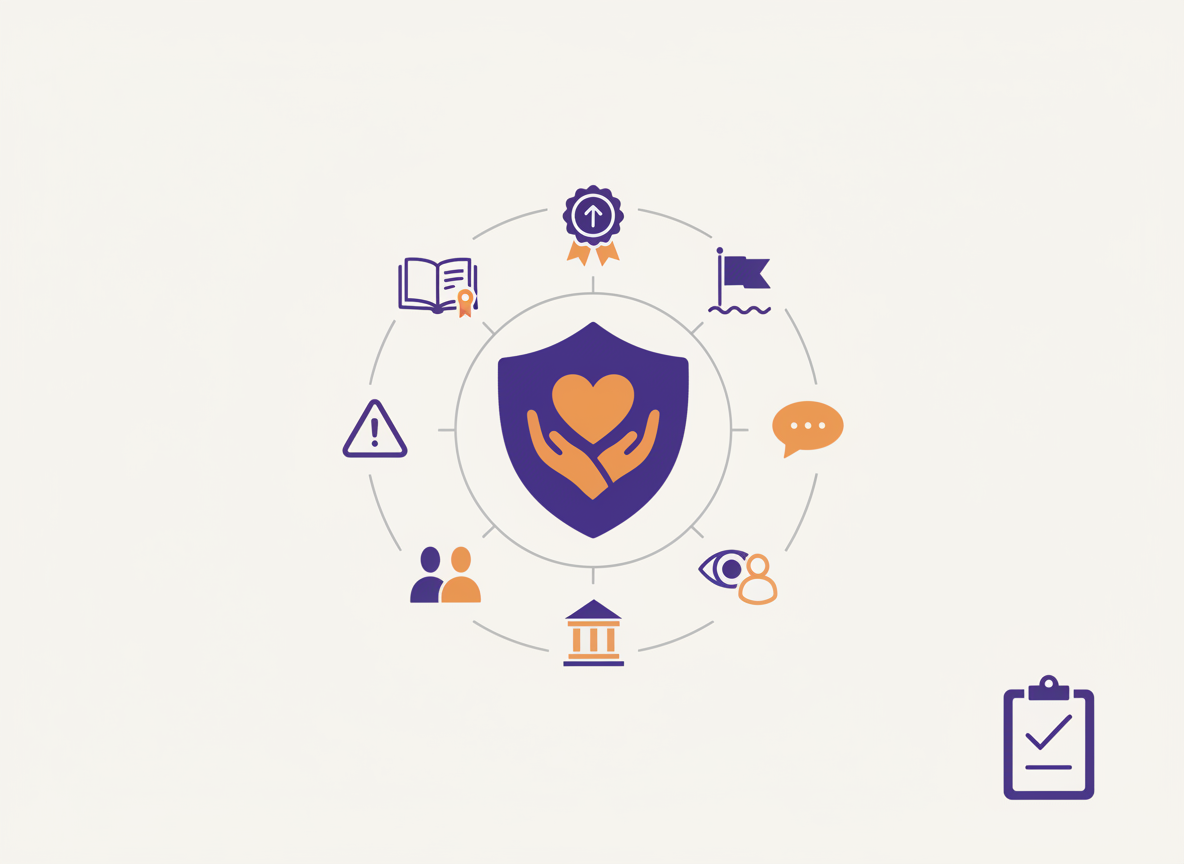
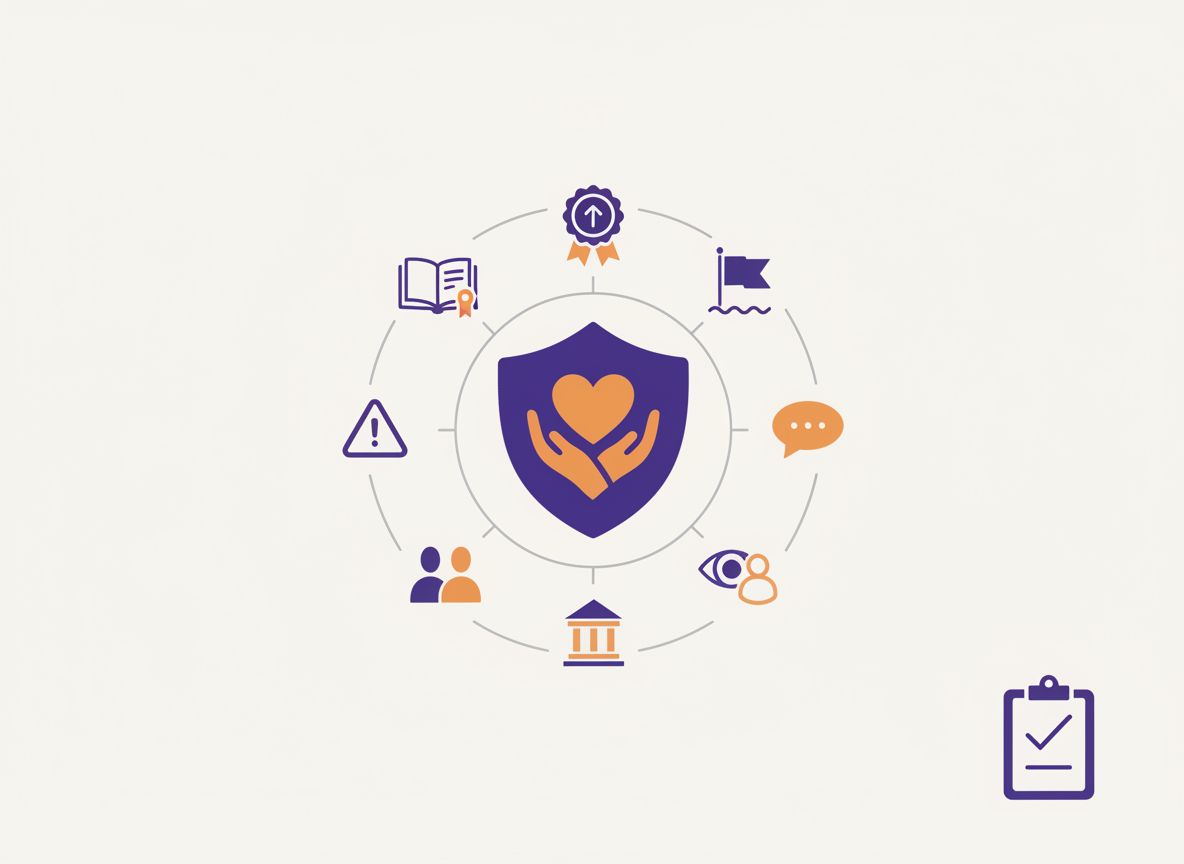
The 10 National Principles, in RTO Terms
The framework itself is broad, so here's what each principle actually looks like when you translate it into RTO practice:
1. Leadership, governance and culture: Name a child safety lead in your organisation and document their accountability. This is about genuine commitment, not a line in a policy nobody reads.
2. Children's rights are promoted and respected: Young learners are informed, listened to, and taken seriously, particularly in enrolment materials and complaints processes.
3. Families and communities are informed and involved: Especially relevant in school-based delivery. Parents and carers should have some visibility of what's happening with their child.
4. Equity is upheld and diverse needs respected: Cultural safety sits alongside child safety. Some states have added it as a universal principle in its own right, and it's reflected in the 2025 Standards too.
5. People working with children are suitable and well supported: Screening, induction and ongoing support, scaled to the level of contact the role actually has with young people.
6. Complaints processes are child focused: Your existing complaints and appeals procedure needs a clear, child-focused pathway, not a separate system.
7. Staff are equipped through ongoing education and training: An annual refresher, not just an induction that happens once and is never revisited.
8. Physical and online environments promote safety: Communication stays on monitored platforms, and young learners know how to ask for help.
9. Implementation is regularly reviewed: Build it into your internal audit, or run it as a standalone self-assessment.
10. Policies and procedures document how the organisation is child safe: This doesn't need to be one single policy. It's often more effective woven through your existing documents, with clear extra steps flagged wherever a learner or volunteer is under 18.
Where the Risk Actually Shows Up
Child safety risk exists at every point of contact, but there are four stages in the learner journey worth paying particular attention to:
· Inquiry and enrolment: Who has contact with the young person during this stage, and what controls are around them?
· Orientation: This is where behavioural expectations need to be explicit: cyber bullying, harassment, and codes of conduct between students, not just between staff and students.
· Delivery and assessment: Who is in the room (physical or online) with your under-18 learners?
· Support and placement: This is often where disclosures happen. Is your support team equipped to recognise and respond to one?
Common Gaps We See
A few patterns come up again and again when RTOs start looking at this properly:
· Under-18 identification gaps: Enrolment staff process the paperwork without flagging that a learner is under 18. A simple tag or colour flag in your student management system solves this.
· Inconsistent screening: Screening tends to focus on trainers and assessors, but anyone with access to a learner's information needs the same level of scrutiny (including admin and support staff).
· Unclear reporting pathways: Staff don't know who to go to if a student discloses something concerning. Everyone should know who the child safety lead is and what happens next.
· Unmonitored one-to-one contact: Text messages, personal social media, and other channels the RTO can't monitor. All communication with under-18 learners needs to sit inside a platform the organisation can access — your LMS, organisational email, or equivalent.
· Third-party gaps: Where a school and an RTO both assume the other is responsible for something. Get this in writing, in a single agreement that clearly assigns responsibility.
Building Your Minimum Viable System
You don't need to build this from scratch as a massive standalone project. At minimum, you need:
· Governance: A named child safety lead, reporting up to the CEO, RTO manager or board.
· People: A screening register with expiry reminders, an induction process, and an annual refresher for anyone with learner contact or access to learner information.
· Complaints: Child-focused wording in your complaints, feedback and appeals procedure, with a clear referral point to your child safety lead.
· Environment: Communication protocols, moderation of any discussion forums, and a clear "how do I get help" pathway for under-18 learners.
· Evidence: A way of flagging records (complaints register, continuous improvement register) where the person involved was under 18.
If You Operate Across Multiple States
This is where it gets genuinely complex. Working with Children Checks, screening requirements and mandatory reporting obligations are all state-based, even though the expectation to screen is consistent everywhere.
Practical steps:
· Build a register mapping what's required in each state you enrol students in.
· Don't just check requirements at the start. Monitor and re-verify screening status over time, not only when it's due to expire.
· Know who your mandatory reporter is in each state, and how quickly they need to act.
· This is general guidance, not legal advice. Seek jurisdiction-specific advice for your particular states of operation.
Online Delivery Controls
With more delivery happening online, this is one of the areas worth the most attention:
· No private messaging outside approved channels, and no social media groups for under-18 cohorts.
· One-on-one sessions should be recorded or otherwise reviewable, not conducted in an unmonitored space.
· Moderate discussion forums and know who's participating.
· Make sure under-18 learners know exactly how to ask for help — not just for their learning, but generally.
Work Placement: A Practical Checklist
If your under-18 learners go on work placement, the responsibility doesn't stop at the RTO's front door:
· Ask due diligence questions of the host employer before placement starts.
· Run a pre-placement induction so students understand their rights, and know exactly who to contact if something goes wrong.
· Check in properly during placement — an email isn't a substitute for an actual conversation or observation.
· Debrief after placement with both the student and the host, and ask direct questions: did you feel safe? Did you feel supported? Not just how did you go against the unit of competency.
Getting Started
Rather than trying to tackle all ten principles at once, a self-assessment against the national framework is the most useful starting point. It'll tell you where the genuine gaps are, rather than where you assume they might be. From there, you can layer in the state-specific requirements that apply to where you enrol students.
What Next?
Getting child-safe practices properly embedded across an RTO, not just bolted onto one program, takes more than a policy update. If you'd like support running a self-assessment, building your minimum viable system, or working through what applies to your specific states of operation, get in touch. Alternatively, you can register to watch the recording of our webinar on this topic on the VETQI website.
What Next?
If you’d like our help in XXXXXXX, get in touch!








Registered Training Organisations (RTOs) are increasingly relying on AI-generated quizzes uploaded to a Learning Management System (LMS) – a quick AI prompt, a neatly generated quiz, and up it goes, job done. Except…it isn’t.
While AI-generated assessments can be comprehensive and substantively sound, simply uploading them to an LMS without thoughtful adaptation often results in poorly designed, generally non-compliant assessment tools.